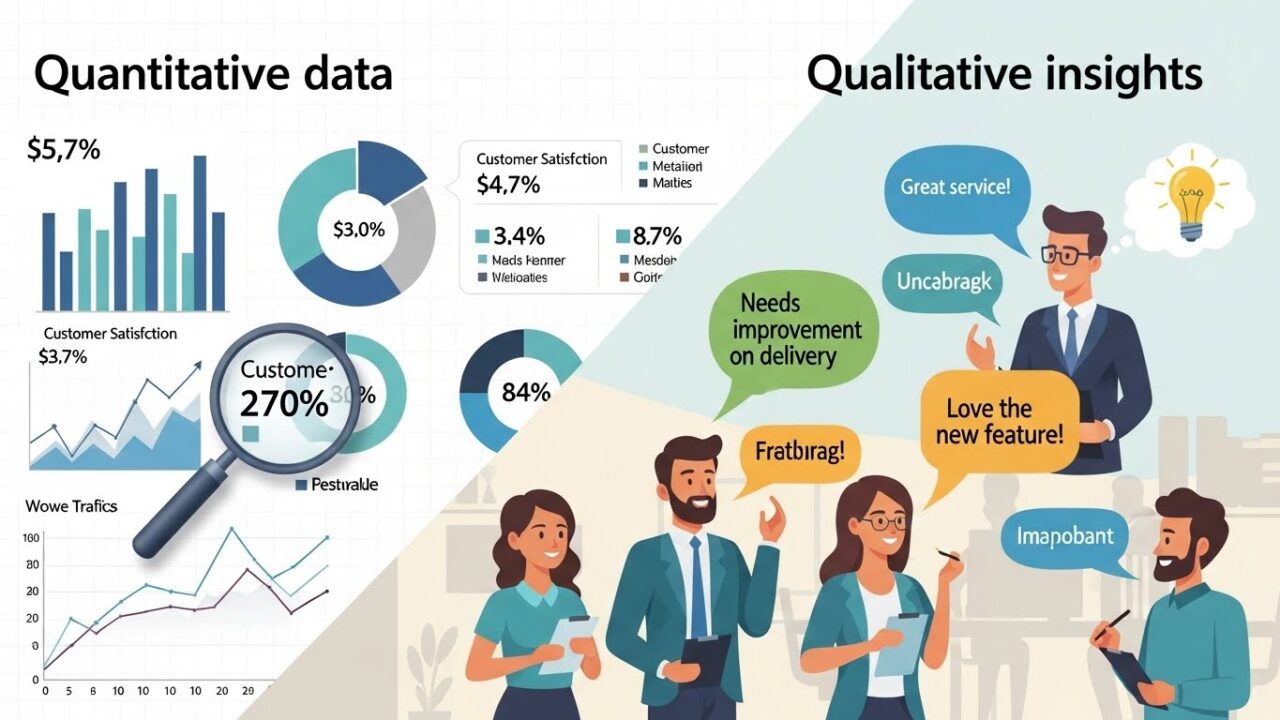
シリコンバレー駐在時代、投資判断のプレゼンで最も苦労したのが、この4つの単語の使い分けでした。
日本語では何となく理解していても、英語で正確に使い分けるのは想像以上に難しい。48歳の今、改めてこの基本に立ち返っています。
なぜこの4単語が重要なのか
ビジネスの意思決定では、常にこの対立軸が現れます。
- データ分析:quantitative vs qualitative
- 評価基準:objective vs subjective
この使い分けができないと、投資家や経営陣への説明で信頼を失います。
Quantitative vs Qualitative:何を測るかの違い

Quantitative /ˈkwɑːntɪteɪtɪv/(定量的)
数字で測定できるもの。
基本例文: “We need quantitative data to make this decision.” (この決定には定量的データが必要だ)
“Sales increased by 30% this quarter. This is quantitative evidence of success.” (今四半期の売上は30%増加した。これは成功の定量的証拠だ)
ビジネス実践例文: “Our quantitative analysis shows that customer acquisition cost decreased from $50 to $35.” (定量分析によると、顧客獲得コストは50ドルから35ドルに減少した)
“The board wants quantitative metrics, not just feelings about market trends.” (取締役会は市場トレンドの感覚ではなく、定量的指標を求めている)
Qualitative /ˈkwɑːlɪteɪtɪv/(定性的)
数字では測れない質的なもの。
基本例文: “Customer satisfaction is often measured through qualitative feedback.” (顧客満足度はしばしば定性的フィードバックで測定される)
“We conducted qualitative interviews with 20 users to understand their pain points.” (20名のユーザーと定性的インタビューを実施し、課題を理解した)
ビジネス実践例文: “The startup has strong qualitative advantages: experienced team, innovative culture, and strategic partnerships.” (そのスタートアップには強力な定性的優位性がある:経験豊富なチーム、革新的な文化、戦略的パートナーシップ)
“While the quantitative results look promising, we also need qualitative assessment of brand perception.” (定量的結果は有望に見えるが、ブランド認知の定性的評価も必要だ)
Objective vs Subjective:誰が判断するかの違い

Objective /əbˈdʒektɪv/(客観的)
誰が見ても同じ結論になるもの。
基本例文: “Revenue is an objective measure of business performance.” (収益はビジネスパフォーマンスの客観的指標だ)
“We need objective criteria for employee evaluation, not personal preferences.” (従業員評価には個人的好みではなく、客観的基準が必要だ)
ビジネス実践例文: “The objective fact is that we missed our quarterly target by 15%.” (客観的事実として、四半期目標を15%下回った)
“Let’s focus on objective metrics: conversion rate, customer retention, and profit margin.” (客観的指標に焦点を当てよう:コンバージョン率、顧客維持率、利益率だ)
Subjective /səbˈdʒektɪv/(主観的)
個人の意見や感覚に基づくもの。
基本例文: “Design preferences are subjective and vary by individual.” (デザインの好みは主観的で、個人によって異なる)
“His assessment was too subjective. We need data-driven evaluation.” (彼の評価は主観的すぎた。データドリブンな評価が必要だ)
ビジネス実践例文: “The CEO’s subjective impression of the market may not reflect actual customer behavior.” (CEOの市場に対する主観的印象は、実際の顧客行動を反映していないかもしれない)
“Avoid subjective language in the report. Use objective measurements instead.” (レポートでは主観的表現を避けよ。代わりに客観的測定を使え)
4つの組み合わせパターン
ビジネスでは、これらを組み合わせて使います。
パターン1:Quantitative + Objective(最強の説得力)
“We use quantitative and objective methods: tracking daily active users, revenue per customer, and churn rate.” (定量的かつ客観的手法を使用:デイリーアクティブユーザー、顧客単価、解約率を追跡)
“The investment committee requires quantitative, objective evidence before approving any deal.” (投資委員会は案件承認前に、定量的で客観的な証拠を求める)
パターン2:Qualitative + Subjective(要注意)
“His evaluation was purely qualitative and subjective, based on personal feelings rather than facts.” (彼の評価は純粋に定性的かつ主観的で、事実ではなく個人的感情に基づいていた)
“We cannot rely on qualitative, subjective assessments for budget allocation decisions.” (予算配分決定に、定性的で主観的な評価に頼ることはできない)
パターン3:Quantitative + Subjective(データの解釈)
“While the data is quantitative, the interpretation can be subjective depending on which metrics you prioritize.” (データは定量的だが、どの指標を優先するかによって解釈は主観的になりうる)
パターン4:Qualitative + Objective(バランス型)
“Customer interviews provide qualitative insights, but we analyze them objectively by identifying common themes.” (顧客インタビューは定性的洞察を提供するが、共通テーマを特定することで客観的に分析する)
実践:シリコンバレーでの失敗と成功
失敗例:2019年のスタートアップ評価
私の当初のプレゼン: “This startup has great potential. The team is passionate and the product looks innovative.” (このスタートアップには大きな潜在力がある。チームは情熱的で、製品は革新的に見える)
投資家の反応: “This is too subjective and qualitative. Where are the numbers?” (これは主観的かつ定性的すぎる。数字はどこだ?)
成功例:改善後のプレゼン
“Let me present both quantitative and qualitative evidence. Quantitatively, they achieved 300% year-over-year growth with $2M ARR. Qualitatively, they have partnerships with three Fortune 500 companies. These objective metrics, combined with strong qualitative factors like team experience, make this a compelling investment.” (定量的・定性的証拠の両方を提示します。定量的には、年間経常収益200万ドルで前年比300%成長を達成。定性的には、フォーチュン500企業3社とのパートナーシップがあります。これらの客観的指標とチーム経験などの強力な定性的要因を組み合わせると、説得力のある投資案件です)
部門長として使う実践フレーズ

会議での使用例
“I understand your subjective concerns, but let’s look at the objective data first.” (あなたの主観的懸念は理解するが、まず客観的データを見よう)
“We need both quantitative KPIs and qualitative feedback from customers.” (定量的KPIと顧客からの定性的フィードバックの両方が必要だ)
“This decision cannot be based on subjective opinions. We need quantitative analysis.” (この決定は主観的意見に基づくことはできない。定量分析が必要だ)
レポートでの使用例
“Our evaluation framework combines objective, quantitative metrics (revenue, user growth) with qualitative assessments (market positioning, competitive advantages).” (評価フレームワークは、客観的・定量的指標(収益、ユーザー成長)と定性的評価(市場ポジショニング、競争優位性)を組み合わせている)
“While quantitative data shows positive trends, qualitative customer feedback reveals implementation challenges that need attention.” (定量データは肯定的トレンドを示すが、定性的顧客フィードバックは注意が必要な実装課題を明らかにしている)
よくある間違いと修正
間違い1:混同
❌ “We need subjective data for this analysis.” (この分析には主観的データが必要だ)
✅ “We need quantitative data for this analysis.” (この分析には定量的データが必要だ)
間違い2:二重表現
❌ “This is an objective and quantitative number.” (これは客観的かつ定量的な数字だ)
✅ “This is an objective metric.” または “This is quantitative data.” (これは客観的指標だ/これは定量データだ)
間違い3:不適切な組み合わせ
❌ “His subjective analysis shows 30% growth.” (彼の主観的分析は30%成長を示す)
✅ “His objective analysis shows 30% growth.” または “The data shows 30% growth.” (彼の客観的分析は30%成長を示す/データは30%成長を示す)
TOEIC Speakingでの活用
60秒問題での使用例
質問:Do you prefer data-driven or intuition-based decisions?
回答例: “I prefer combining both approaches. First, I use quantitative, objective data like sales figures and customer metrics to understand the situation clearly. However, I also value qualitative insights from team members who have direct customer contact. While subjective opinions alone are risky, they can reveal issues that numbers don’t show. The best decisions use objective data as the foundation, then add qualitative context for a complete picture.”
まとめ:4つの単語の使い分けマトリックス
| 数字で測れる | 数字で測れない | |
|---|---|---|
| 誰が見ても同じ | Quantitative + Objective(最強) | Qualitative + Objective(バランス) |
| 個人の解釈次第 | Quantitative + Subjective(要注意) | Qualitative + Subjective(危険) |
48歳になって気づいたのは、若い頃は「何となく」使っていたこの4単語が、実はビジネスコミュニケーションの核心だということです。
シリコンバレーでの4年間、投資判断の場で何度も「Where’s the objective, quantitative evidence?」と問われました。
定量的・客観的データと、定性的・主観的要素のバランス。これがグローバルビジネスで信頼を得る鍵なのです。






 マンガでわかる 最速最短! 英語学習マップ
 英語日記BOY
 Distinction 2000